29 Jan
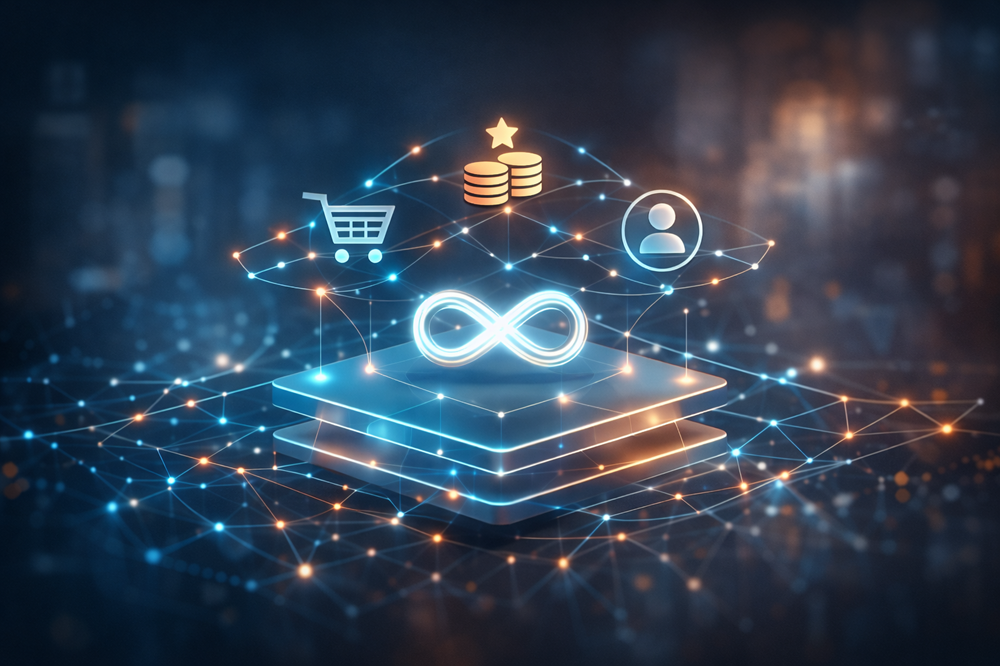
Headless Loyalty: How Modern Brands Add Loyalty Without Breaking What Already Works
When Loyalty Feels Important But a New System Doesn’t
Most brands we speak to today are not questioning whether they need a loyalty program.
They are questioning how to add one without breaking what already works.
- There is usually a working ordering platform.
- A live consumer app.
- A partner portal that sales teams, distributors, or customers already rely on every day.
And then the loyalty conversation starts.
- Marketing wants stronger engagement and retention.
- Sales wants behavior to change faster, more often, and more predictably.
- IT, understandably, asks the same question every time.
Are we building another portal now?
That is where the friction begins.
Because loyalty matters more than ever, but classic loyalty approaches no longer fit how modern systems are built or used. The issue is not points, rewards, or incentives.
It is what happens when loyalty requires a new frontend, a parallel flow, or yet another system to maintain.
In practice, the real challenge is not loyalty itself.
It is integration.
It is flow.
It is adding loyalty logic into existing journeys rather than alongside them.
This is where conversations around headless loyalty start to emerge. Not as a trend, but as a response to a very real and very common problem.
Why Loyalty Has Changed
For a long time, loyalty programs were built around simple mechanics.
Points. Discounts. Occasional rewards.
That model worked when loyalty was treated as a marketing add on. Something layered on top of the business, often disconnected from how products were sold or how customers actually behaved.
That context has changed.
Today, loyalty is no longer just about giving something back after a transaction. It is about shaping what happens before, during, and after that transaction. It is about influencing decisions, guiding behavior, and protecting long term value.
This shift is visible across both B2B and B2C environments.
In retail loyalty programs, brands are under pressure to move beyond generic points systems toward experiences and incentives that actually change buying patterns. In complex sales and partner ecosystems, customer loyalty and reward programs are increasingly expected to support consistency, compliance, and performance, not just engagement.
As a result, loyalty has quietly evolved into something much more strategic.
- It now acts as a growth lever, helping brands increase frequency, basket size, and participation.
- It functions as a revenue protection tool, reducing churn and preventing high value customers from drifting to alternatives.
And more than anything, it has become a behavior engine, translating business priorities into clear incentives that people can act on.
This is why loyalty discussions today often extend far beyond marketing teams. Sales, operations, and product leaders are now deeply involved. They are not asking for another rewards program software solution. They are asking how loyalty logic can be embedded into real journeys and real workflows without creating new friction.
That change in expectation is not accidental. It reflects how digital products, commerce platforms, and customer touchpoints have evolved. Loyalty has had to evolve with them.
3 Patterns Behind Modern Loyalty Requests
Across industries, regions, and business models, the loyalty conversations we see tend to differ in context but align in structure. When you step back, the same patterns appear again and again.
These patterns explain why many traditional loyalty approaches struggle today and why different architectural conversations are starting to take place.
1. There Is Already a System. Do Not Touch It
In almost every case, loyalty is not being discussed in a vacuum. There is already something in place.
- An ordering platform that drives revenue.
- A mobile app customers use daily.
- A partner portal that supports sales and distribution.
- Commerce, POS, or internal tools that teams depend on to do their jobs.
These systems work. They are adopted. They are trusted.
Introducing a new frontend into this environment almost always creates friction. It adds an extra step, a parallel journey, or a new surface that users did not ask for. Adoption drops, complexity rises, and loyalty becomes something people avoid rather than engage with.
The insight here is simple but powerful. The goal is not to add more layers. It is to add logic.
This is where headless approaches begin to make sense. Loyalty works best when it integrates into existing systems rather than competing with them.
2. Loyalty Is Logic, Not Interface
Another common misconception is that loyalty lives on screens.
In reality, loyalty decisions are driven by logic. Rules. Thresholds. Segments. Eligibility. Triggers that determine when something happens and why.
- Who qualifies for an incentive.
- What behavior is being rewarded.
- When rewards are unlocked.
- How progress is tracked across time and touchpoints.
These decisions happen long before anything is displayed to a user. The interface simply reflects outcomes that have already been calculated elsewhere.
This is why loyalty should not be thought of as a screen or a standalone experience. It functions as a decision engine that sits behind the scenes, responding to behavior and enforcing business priorities consistently.
When loyalty is treated this way, APIs become more important than pages. A headless, API-first loyalty program allows the same logic to be reused, extended, and embedded wherever it is needed.
3. One Brain Many Channels
The third pattern becomes visible once loyalty logic is separated from presentation.
Most modern businesses operate across multiple channels. B2B and B2C environments often coexist. Internal users and external users interact with the same systems in different ways. Hybrid models are becoming the norm rather than the exception.
Despite this complexity, the underlying loyalty logic does not need to change.
What changes is where and how that logic is surfaced. An incentive might appear inside an ordering flow, a mobile app, or a partner dashboard. The behavior being rewarded remains the same.
This is why a headless loyalty program can support many channels without fragmenting control. One central brain governs decisions. Multiple channels consume the same logic in context.
When loyalty is built this way, consistency improves. Governance becomes easier. And loyalty stops being something that breaks as soon as channels multiply.
Examples That Show What Headless Loyalty Enables
Once you recognize the patterns, it becomes easier to see how headless loyalty plays out in real situations. Not as a theory, but as a practical way to extend what already exists.
These examples are intentionally generic. The point is not who did it, but how the thinking applies.
1. B2B Loyalty Embedded Into Ordering
Imagine a business with an established B2B ordering platform. Distributors or partners place orders there every day. That platform already drives revenue, workflow, and reporting.
Instead of launching a separate loyalty portal, targets, incentives, and rewards are embedded directly into the ordering experience.
- Partners see progress toward incentives as they place orders.
- Specific products or behaviors unlock rewards automatically.
- Eligibility and rules are enforced in the background.
Nothing new to log into. Nothing new to learn.
In this setup, you are not adding a loyalty program on top of the business. You are adding loyalty logic into the system that already matters. This is where loyalty program management software starts to look less like standalone tools and more like infrastructure.
2. B2C Loyalty Inside the Consumer Journey
Now consider a consumer brand with an existing mobile app or ecommerce experience. Customers already browse, purchase, and check out within a familiar flow.
Loyalty does not live on a separate page or a redirected experience. Rewards appear naturally at checkout or immediately after purchase. Progress is visible in context. Incentives influence decisions at the moment they matter.
The result is simple but powerful. Loyalty becomes part of the journey, not an extra step added afterward.
This is where consumer loyalty program software begins to feel less transactional and more experiential. In retail loyalty programs, embedding rewards directly into the buying journey often has a greater impact than expanding the catalog or increasing point values.
3. New Generation Use Cases
Some of the most interesting loyalty use cases today do not fit neatly into traditional B2B or B2C categories.
- Think about gig workers operating inside a platform, like couriers whose incentives depend on service quality, delivery volume, and complaint scores, all surfaced inside the app they already use to do the job.
- Or trust and authentication flows where verifying actions matters as much as rewarding them, like product authentication flows where customers verify a product before incentives unlock, helping brands protect trust while still driving repeat purchase.
- Or marketplaces that need consistency across thousands of independent actors.
- Or regulated markets where behavior must be guided carefully.
In these environments, loyalty is not about copying what others have done. It is about controlling behavior, enforcing standards, and aligning incentives with outcomes.
The mindset shift is critical.
Loyalty is not what your industry does today.
It is what your business needs to control tomorrow.
Headless approaches make these models possible because the logic can adapt without forcing new interfaces or new journeys.
If these examples feel close to home, a headless loyalty approach may be the missing layer.
Apex Loyalty is a SaaS loyalty platform that supports both headless and full-stack deployments, so you can embed loyalty via APIs into existing systems or launch with a ready-to-use experience.
Start Simple Then Scale
One of the most common reactions to headless loyalty is hesitation.
It sounds powerful.
It sounds flexible.
And it often sounds bigger than what a team feels ready to take on.
This is where a misconception needs to be cleared.
Headless does not mean complex. It does not mean enterprise only. And it does not mean you have to redesign everything at once.
In practice, many teams start small.
- A simple points-based loyalty program tied to one behavior.
- A basic reward catalog focused on a limited set of incentives.
- A single use case embedded into an existing flow.
That is enough to validate value and build confidence.
Imagine you already have a consumer app that drives transactions. You do not need to rebuild the experience to prove value.
Start with a small points model tied to one or two actions, like account creation, first order, or repeat purchase within a set time window. Surface progress inside the existing checkout and post-purchase screens.
Add a small reward catalog with a few high-signal incentives. Once adoption and behavior shift are visible, you can expand into tiers, targeted offers, or partner-funded rewards without changing the frontend.
What matters is not how many features you launch on day one. It is the architectural choice you make at the beginning. When loyalty logic is decoupled from interface, you gain the ability to scale without rework.
As needs evolve, rules can become more sophisticated. Segments can expand. Rewards can diversify. New channels can consume the same logic.
This is why headless loyalty works well as a foundation for rewards program software. It allows teams to grow from simple to advanced without replacing systems or retraining users.
The principle is straightforward. Architecture first. Complexity later.
Loyalty Does Not Need Another Frontend
After all the conversations, patterns, and examples, one thing becomes clear.
The real question is not
Do we need a loyalty program
The real question is
How do we add loyalty without breaking what already works
This shift in thinking changes everything.
When loyalty is treated as a layer of logic rather than a layer of interface, it stops competing with existing systems. It starts strengthening them. A headless loyalty approach allows incentives, rules, and rewards to live where they belong, inside real journeys and real workflows.
This is where API-first loyalty approaches matter. They make it possible to embed the same loyalty logic across platforms, channels, and user types without fragmentation.
One set of rules. One decision engine. Many ways to activate it.
Whether loyalty supports growth, protects revenue, or guides behavior, its effectiveness depends on how naturally it fits into the systems people already use.
Loyalty does not need another frontend. It needs the right logic layer.
Whether you operate in B2B, B2C, or somewhere in between, loyalty does not need a new frontend.
Apex Loyalty is a SaaS loyalty platform for designing and running loyalty programs with both headless API integration and full-stack delivery, so you can fit loyalty into your current ecosystem without limiting what comes next.
Related Post


About Apex Loyalty
Solutions